The War Is Making It Harder to Keep the Lights On, 2,000 Miles Away
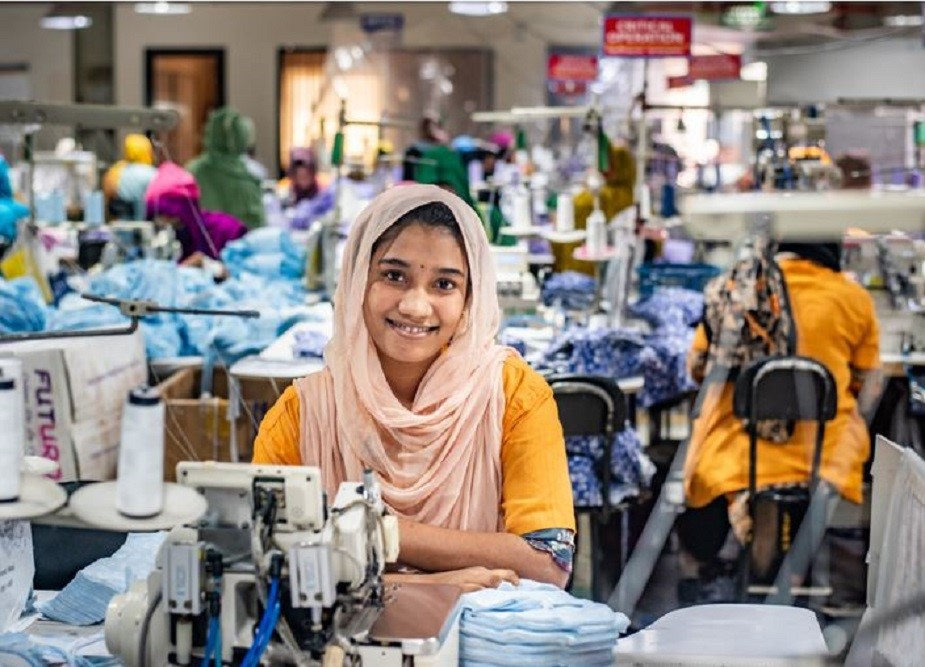
Bangladesh is taking steps to conserve electricity, which its factories need to keep stitching together the world's clothing.
The final Ramadan holidays started early for university students in Bangladesh, on March 9, but for all the wrong reasons. The country's main schools announced that classes were canceled, effective immediately and continuing until later this month. The government shut the campuses to save electricity — a drastic response to the global energy crunch caused by the war in the Persian Gulf.
"It doesn't feel like a vacation to me," said Abdullah Al Mahmud Mehedi, 23, who has been studying for a master's degree in social sciences at the University of Dhaka.
Like other countries, Bangladesh is worried about its supply of crude oil and natural gas. Access to the gas is of particular concern. About half of Bangladesh's electricity comes from power-generation facilities that burn gas. Nearly a third of that gas comes from Qatar, and the warfare in the Gulf has all but blocked its flow.
In addition to closing the universities, the government has also started imposing temporary blackouts and other measures to conserve power. If the gas runs out, so does the electricity that powers the lights and the factories crucial to Bangladesh's export-oriented economy.
All this is against the backdrop of Bangladesh's delicate political condition. The country voted in a new government just a month ago, the first elected since Sheikh Hasina's reign collapsed in August 2024. Tarique Rahman, the new prime minister, took office in February, declaring that his victory "belongs to democracy" but warning that the country "begins our journey" with a fragile economy.
Ms. Hasina was toppled after 15 years in power by a student-led movement that harnessed deep outrage over a financial crisis. Bangladesh's economic model combines reliance on garment manufacturing — nearly 85 percent of its exports — with imports of fuel and other essential goods.
That model exposes Bangladesh to forces beyond its borders. When Russia invaded Ukraine, disrupting trade and driving up the price of food and oil, Bangladesh's economy wobbled. The country's garment industry survived that crisis and the political chaos that followed, just as it had remade itself after a factory collapsed in 2013, killing 1,134 workers and scaring off foreign buyers.
Now the resilience of Bangladesh's factories faces another test.
Mohiuddin Rubel, the former director of the Bangladesh Garment Manufacturers and Exporters Association, who runs several factories of his own, blamed the country's penchant for single-mindedness for its vulnerability.
"Bangladeshis are very good at doing one thing, like ready-made garments," he said. "We are not diversified." And the same goes for its power grid, which, in his view, makes far too little use of renewable energy.
Shafiqul Alam, an analyst at the Institute for Energy Economics and Financial Analysis in Dhaka, said he was worried about the imminent gas shortage and the need to keep factories humming.
Bangladesh already uses load shedding, or planned blackouts, usually lasting a couple of hours, to reduce strain on overburdened power stations. They are the scourge of modern factories, which cannot afford to idle thousands of workers. Most keep enormous diesel-powered generators ready to cover supply gaps.
These generators are an expensive substitute for gas-fired thermal stations, but Bangladesh does have alternative sources for diesel, including Singapore and Malaysia.
Another worry is the summer heat, which comes early to Bangladesh. The government might have to begin load shedding by April, when peak demand is expected to exceed 18,000 megawatts, Mr. Alam said. "But they must plan it properly so that the industrial sector is not negatively affected," he added.
The way to do that, Mr. Alam said, is for Bangladeshis to conserve electricity at home. Households consume twice as much as all the factories combined. "The government needs to raise public awareness without causing panic," he said. For instance, it could point out how much money an air-conditioned home could save by raising the thermostat from 75 to 77 degrees Fahrenheit.
There may be a diplomatic opportunity hidden in the crisis. Relations between Bangladesh and its neighbor India have been rocky since 2024, when Ms. Hasina took refuge in New Delhi. But Aninda Islam Amit, an official in Bangladesh's energy ministry, said, "On average, 15,000 tons of diesel are expected to arrive from India each month."
And, Mr. Amit said, "Standing by a neighbor during a crisis is a matter of courtesy."
In Bangladesh's premier industrial hub, the Dhaka Export Processing Zone, electricity supply is guaranteed, and Mr. Rubel's factories have a prime location within it. The zone, established in 1993, is an example of the high priority Bangladesh has put on its garment industry. The sewing machines inside would be the last to suffer from a blackout.
But Mr. Rubel knows that many Bangladeshis, including many of his colleagues, are painfully exposed to shortages. They all keep diesel generators. "Outside the zone," he said, "people tend to need them often."
Courtesy - The New York Times






Comments